How to Trade Meme Coins Without Blowing Up Your Account
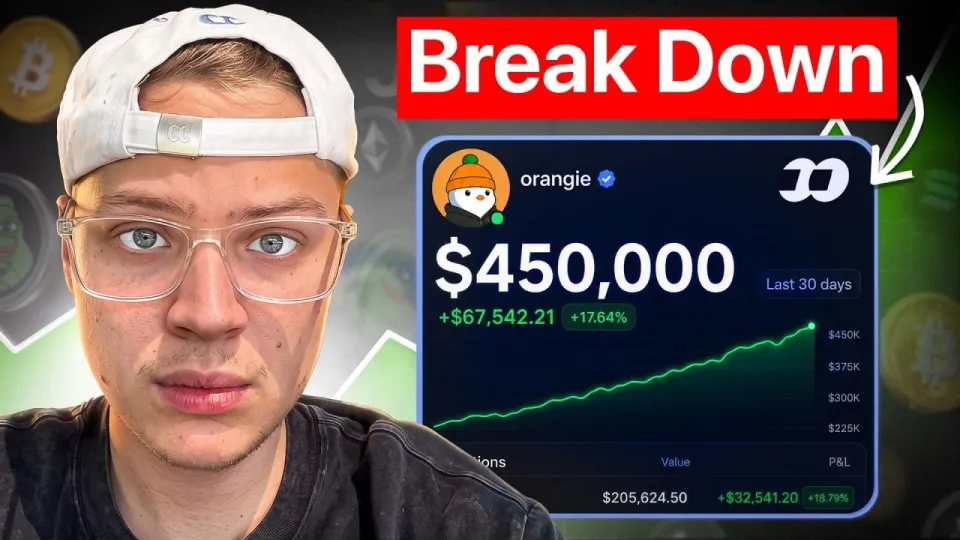
Video: How I Made $450,000 Trading Memecoins in 30 Days
Need articles like this for your video? They help promote it on YouTube and Google — order them in the Telegram bot @sat_sit_bot. The bot writes and publishes the articles itself (with your YouTube video embedded) on popular topical websites (no ads). Try it free: 50 articles on us.
· based on the channel Orangie Web3
Key takeaways
- Meme coins are pure attention and liquidity plays: no cash flow, no earnings, only the next buyer.
- A single winner can cover many losers, so size every position as if it can go to zero.
- The trade is won on entry and exit: check liquidity, holder distribution and dev wallet before buying.
- Solana meme coins are usually launched through pump.fun-style platforms and "graduate" to a DEX when the bonding curve fills.
- Copying calls from private groups is not an edge; the edge is your own exit plan and risk limit.
Meme coins are tokens with no cash flow, no product and no earnings — their price is set purely by attention and liquidity, so the only way to trade them profitably is to cap your risk per position and have an exit plan before you buy. Treat every meme coin as a lottery ticket with a real market attached: size it so that a total loss is survivable, and let one or two outliers pay for the rest. A structured walkthrough of this approach, including the tools used, is available through the Kaizen Group membership checkout, where the trading workflow behind the "$450,000 in 30 days" headline is broken down trade by trade.
What a meme coin actually is and why it moves so fast
A meme coin is a token whose value rests on a community, a joke or a narrative rather than on revenue, and that is exactly why it can multiply in hours and collapse in minutes. There is no discounted cash flow to anchor the price, so the market prices the next buyer's willingness to pay. Three mechanics explain most of the volatility:
- Thin float. A large share of supply often sits with the deployer and early snipers, so small buys move the price violently.
- Bonding curves. On Solana, most new tokens launch through pump.fun-style contracts that fill a curve and then "graduate" to a decentralized exchange, which is when real liquidity appears.
- Reflexivity. Price action itself is the marketing: green candles attract volume, volume attracts influencers, influencers attract more buyers.
That structure means the classic fundamental checklist does not apply. Instead you are trading order flow, holder distribution and the speed at which attention decays.
How to size positions so one loss cannot end you
The core rule of meme coin trading is that any single position must be small enough to go to zero without changing your life. Practically:
- Decide a fixed risk unit, for example 1–2% of your trading capital per token.
- Never average down into a token whose thesis was "it is pumping" — that is not a thesis.
- Keep a cash reserve: most of the return in this niche comes from being able to take the next setup after a string of losses.
- Separate gambling money from savings, and never use borrowed funds.
The arithmetic is what makes the niche survivable. If you risk 2% per trade and hit one 20x, that single position returns 40% of your capital — enough to absorb twenty full losses. This is the honest version of the "one hit pays for everything" idea that circulates in the community, and it only works when the losers are genuinely small.
How to check a token before you buy
Before any entry, run a short mechanical checklist; it takes about two minutes and filters out most rugs. Look at:
- Liquidity and market cap. A pool with a few thousand dollars of liquidity cannot absorb your exit. Compare liquidity to market cap — a very low ratio means the price is a mirage.
- Holder distribution. If the top ten wallets hold a large share, those wallets can dump on you. Check whether the deployer still holds a meaningful stake.
- Contract permissions. Mint authority and freeze authority should be revoked; otherwise supply can be inflated or your tokens frozen.
- Age and volume pattern. A token that printed a vertical candle in the first minutes and then went flat is usually already distributed to late buyers.
- Narrative and socials. A live community with organic replies is different from a bought follower count. Check whether the same deployer has launched a string of dead tokens.
None of these checks guarantees a winner, but they reliably remove the worst tail risk: the token that cannot be sold at all.
How to enter and exit a meme coin trade
Entry and exit discipline matters more than coin selection, because the same token can be a good trade for one participant and a loss for another. A workable process:
- Define the invalidation first. Decide the price or the event (liquidity pulled, dev wallet selling) at which you are simply wrong.
- Buy in tranches. A first small position on the initial setup, an add only if the token proves itself with volume and holders.
- Take partial profits on the way up. Selling a third or half at the first strong multiple removes the emotional pressure that causes round-tripping.
- Leave a runner only with house money. Keeping a small tail position costs nothing once the principal is out.
- Write the exit down. Exits decided in the heat of a candle are usually wrong.
The most common failure is not picking a bad coin — it is holding a 5x back to zero because the plan existed only in your head.
Why copying calls from private groups is not an edge
The uncomfortable truth about the meme coin niche is that public calls are usually exit liquidity for the people who called them. Groups of experienced traders share early entries and snipe launches together; by the time a call reaches a wider audience, the earliest wallets are already positioned and the risk-reward has flipped. That does not make communities useless — they are useful for learning process, tooling and post-mortems — but a copied ticker is not a strategy. If you cannot explain in one sentence why a token should attract the next buyer, you are not trading, you are donating.
Common questions from new meme coin traders
Newcomers tend to hit the same three walls: they lose most of a small starting stack in the first weeks, they cannot follow fast-paced explanations, and they are unsure when to break their own rules. Losing 90% of a $100 experiment is a cheap tuition fee if it teaches position sizing; it becomes expensive only when the same mistake is repeated with rent money. On speed: recorded breakdowns of entries and exits, with the reasoning behind each decision, are far more useful than live calls, because you can pause and reconstruct the logic. And on rules: the only rule worth having is the one you follow after three losses in a row.
Useful links
- Kaizen Group membership checkout — the paid community and trading workflow.
- FOMO trading platform — the interface used for execution in the walkthrough.
- Orangie Discord — discussion and trade reviews.
- Instagram @orangieyt — short updates and clips.
The takeaway on meme coin trading
Meme coins are a liquidity and attention game, and the traders who survive it are the ones who treat it as risk management first and entertainment second. The $450,000 result in the "Orangie Web3" breakdown is the visible outlier; behind it sit hundreds of small, boring, capped decisions. Copy the process, not the outcome: fixed risk units, a two-minute contract check, partial profits on the way up, and a written exit before entry. If you want the full trade-by-trade reasoning, start with the Kaizen Group checkout and watch how each position was sized and closed.
Questions & answers
How much money do you need to start trading meme coins?
You can start with a small amount you are fully prepared to lose, because the point of the first phase is learning execution, not earning. The important number is not the starting balance but the risk per trade — keep it at 1–2% of capital so a losing streak does not end your run.
Why do most meme coins go to zero?
Most launches have thin liquidity, a large share of supply in a few wallets and no reason for new buyers to arrive after the first wave of attention fades. Once volume dries up, holders cannot exit at quoted prices, and the price collapses toward the remaining liquidity.
Is it worth paying for a trading group or course?
A paid group is worth it only if it shows the reasoning behind entries and exits, including the losers, rather than just tickers. Copied calls usually arrive after early wallets are positioned, so value comes from process, tooling and trade reviews, not from signals.
What is the single most important rule for a beginner?
Cap the loss on every position before you enter and write the exit down. Traders who survive the niche are not better at picking winners; they are better at keeping losers small enough that one big hit actually matters.
Source: How I Made $450,000 Trading Memecoins in 30 Days · Markdown version